
US-Iran: more than four decades of enmity
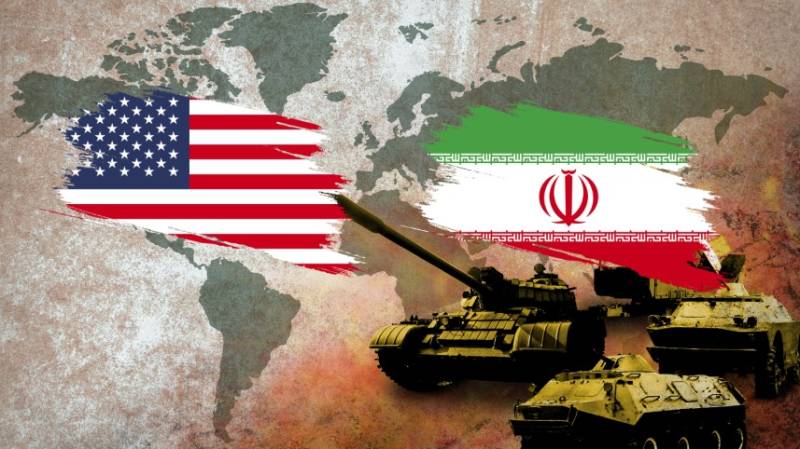

The United States and its arch-rival Iran, due to hold talks in Oman on Friday, have been at daggers drawn since the 1979 Islamic Revolution and embassy hostage crisis in Tehran.
1979: hostage crisis
On November 4, 1979, students demanding the extradition of Iran's last shah Mohammad Reza Pahlavi take hostage dozens of diplomats and employees of the US embassy in Tehran.
The move comes seven months after the establishment of the Islamic Republic of Iran.
Some 52 hostages are held for 444 days, with a dozen of them released over the months on compassionate grounds.
In April 1980, Washington breaks off diplomatic relations with Iran and imposes restrictions on commerce and travel. Nine months later, the last hostages are released.
2002: 'axis of evil'
On April 30, 1995, US president Bill Clinton imposes a complete ban on trade and investment with Iran, accusing it of seeking to acquire nuclear weapons and of supporting terrorism.
Foreign companies that invest in Iran's oil and gas sector are targeted.
On January 29, 2002, US president George W. Bush puts Iran on his list of three countries, alongside Iraq and North Korea, in the "axis of evil" supporting terrorism.
In April 2019, the US designates Iran's elite military force, the Islamic Revolutionary Guard Corps, a terrorist organisation.
2018: US walks out of nuclear deal
In the early 2000s, revelations of the existence of undeclared nuclear sites in Iran spark fears Tehran is trying to make nuclear weapons, claims it denies.
A 2011 report by UN nuclear watchdog IAEA, collating "broadly credible" intelligence, says that at least until 2003 Iran "carried out activities relevant to the development of a nuclear explosive device".
In 2005, Iranian president Mahmoud Ahmadinejad ends a freeze on uranium enrichment. Tehran insists its nuclear programme is solely for civilian purposes.
A decade later, an accord with six world powers -- China, France, Germany, Russia, United Kingdom, United States -- on Iran's nuclear programme is reached in Vienna.
It gives Tehran relief from crippling economic sanctions in exchange for guarantees that it will not make an atom bomb. The deal is endorsed by the United Nations.
Washington under US President Donald Trump's first term pulls out of the nuclear pact in 2018, reinstating its sanctions on Iran and companies with ties to it.
A year later Iran starts to roll back some of the commitments it made under the nuclear deal including on uranium enrichment.
Negotiations between the United States and Iran are held in 2025 but break down over the question of uranium enrichment. Other diplomatic efforts fail to bear fruit. At the demand of France, the UK and Germany over Iran's breach of the accord, UN sanctions are reimposed on September 28, 2025. The accord lapses in October.
2020: top general killed
On January 3, 2020, a US drone strike on Baghdad's international airport kills top Iranian general Qasem Soleimani, who spearheaded Iran's Middle East operations as commander of the Revolutionary Guards' Quds Force.
Trump ordered the attack, saying Soleimani had been planning an "imminent" attack on US diplomats and forces in Iraq.
Washington had described Soleimani as a "terrorist" since 2005.
Iran retaliates with missile strikes on bases in Iraq hosting American forces.
2025: nuclear sites bombed
The US intervenes briefly in the 12-day war between Israel and Iran, launching strikes against three major Iranian nuclear sites on June 21, 2025. Trump says the sites have been "obliterated", but the extent of the damage is not known.
2026: 'Armada' in the Gulf
Trump threatens to strike Iran in response to its bloody crackdown on the massive protest movement which began in late December 2025.
He sends what he describes as an "armada" to the Gulf, with the arrival in late January in the region of the aircraft carrier USS Abraham Lincoln and its escort.
Washington urges Iran to negotiate a deal. Tehran says the talks should be limited to the nuclear issue, while Washington wants them to also cover Iran's ballistic missiles.