
How we won the war imposed by Modi’s India
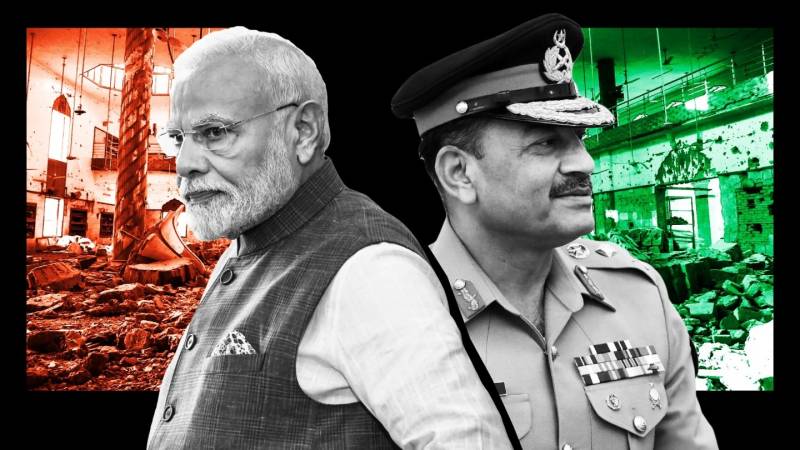

History shall remember 2025 as the year Pakistan stood tall in the face of naked aggression, when a war imposed by Indian Prime Minister Narendra Modi was not only repelled but decisively won. It will be remembered as the moment when Pakistan’s national unity, military excellence, and strategic clarity shattered the myth of Indian supremacy. And it will be remembered as the chapter where General Syed Asim Munir, the Chief of Army Staff, led the nation to an honourable and historic victory.
This war was not of our choosing. It was forced upon us by a regime obsessed with militarised nationalism and regional bullying. Modi, under immense internal pressure—political scandals, economic stagnation, and growing global scrutiny—sought a distraction. His answer was war. The initial act of aggression began with unprovoked strikes on civilian infrastructure in Azad Jammu and Kashmir and along the Sialkot border. Within 48 hours, Pakistan had recorded over 175 cross-border violations. But instead of panic, there was preparedness.
Pakistan’s response was swift, disciplined, and devastatingly effective. Within a week, the Pakistan Air Force had established aerial superiority, downing 12 Indian fighter jets—including 2 Su-30 MKIs and 3 Rafale aircraft—while losing only 2 of its own, both pilots safely returning. On land, Indian forward operating bases crumbled under precise Pakistani artillery and mechanised assaults. Over 60 Indian tanks were neutralised in the Shakargarh sector. At sea, Pakistan Navy sealed off critical trade routes, triggering a 27% drop in Indian exports within two weeks, confirmed by maritime tracking data.
At the heart of this historic defence stood a man whose leadership transformed the battlefield: General Syed Asim Munir. A soldier of principle, intellect and discipline, General Munir combined traditional strategic acumen with the demands of hybrid warfare. He orchestrated real-time coordination between the ISI, Military Intelligence, Air Force and Navy, allowing Pakistan to respond with surgical precision. By delaying full mobilisation for 72 hours, he created strategic ambiguity that stunned Indian planners and delivered Pakistan the advantage of surprise. It was classic Sun Tzu: appear weak when you are strong, and strike when the enemy is overconfident.
But General Munir’s contribution went beyond military command. He stabilised the home front, coordinated with the political leadership, maintained diplomatic dialogue with allies in Beijing, Ankara, and Riyadh, and ensured that Pakistan’s principled stance was heard in international forums. His refusal to escalate recklessly and his insistence on proportional response earned Pakistan respect even among neutral observers. A joint statement by several foreign military attachés in Islamabad described Pakistan’s conduct as "a textbook example of strategic discipline under fire."
While India descended into internal chaos—media blackouts, civil unrest, power outages—Pakistan remained composed and united. Our embassies presented undeniable evidence of Indian aggression, winning support from 34 countries in the UN General Assembly’s emergency session. India, on the other hand, found itself rebuked by its own partners, some of whom questioned the timing and motives of Modi’s war.
Our cyber divisions worked tirelessly to dismantle over 120 misinformation campaigns. Doordarshan, India's state broadcaster, was even briefly hacked with the now-iconic message: “Pakistan seeks peace, not war—but will never be subdued.”
But this victory was more than military—it was moral, political, and national. It belonged to every soldier at the front, every doctor treating the wounded, every intelligence operative in the shadows, and every citizen who stood by their nation. It belonged to the families who sacrificed their loved ones, to the media workers who told the truth under threat, and to the youth who carried the flag with pride.
Yet, no one deserves greater tribute than General Asim Munir. A man who asked for no credit, who stood not in front of the nation but beside it. He led not with bluster, but with resolve. Under his command, Pakistan did not just defend its borders—it reaffirmed its identity as a sovereign, dignified, and resilient nation.
We did not start this war. We were provoked. But we finished it. Honourably. Decisively. And with our heads held high.
Let the world remember: Pakistan does not seek conflict, but when it is imposed upon us, we will rise—not as victims, but as victors.