
Colombia ex-security chiefs blast decision to sever US intel ties as 'absurd'
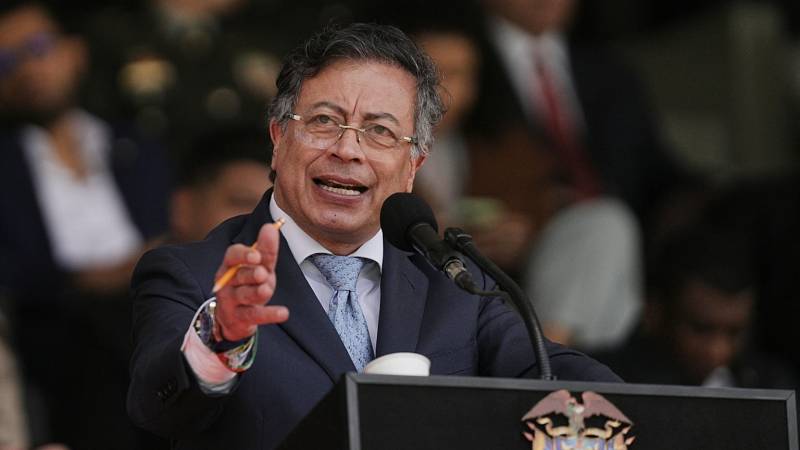

Colombian ex-military and intelligence bosses warned Wednesday that leftist President Gustavo Petro's decision to cut intelligence sharing with the United States was "unthinkable" and "absurd."
Speaking to AFP, several former security officials expressed shock and anger at Petro's decision Tuesday to suspend communications and "dealings with US security agencies" at all levels.
The decision was "absurd" and "makes no sense," according to one former head of police, who spoke on condition of anonymity.
He expressed fury that Petro's decision could aid drug trafficking groups and cause the amount of cocaine exported from Colombia to "overflow."
"How much mourning? How many widows? How many orphans? How much pain do we carry -- personally, institutionally, and patriotically -- because of drug trafficking?"
There are fears that -- if followed to the letter -- Petro's order could not only hinder drug interdiction but also Colombia's fight against domestic armed groups.
Colombia's security services appeared to have been blindsided by the announcement, which was made Tuesday evening on social media.
"It's a political issue," admitted one lieutenant, a serving member of the armed forces.
"You know how the president is -- he sends a message on X, but it's not that easy" to implement. "We only follow orders, and no instruction has arrived yet."
- 'Friendships' in doubt -
Retired Navy Captain Carlos Pinedo warned the decision would have "a very big impact."
"It's very serious because it shuts down communication channels and undermines years of work and relationships."
Forged from a decades-long war against insurgents and cartels, Colombia's military and intelligence services are seen as highly capable.
They also have close ties with the US agencies, from whom they have received hundreds of millions of dollars in aid.
One former US intelligence official said information gleaned from human sources by Colombian officers was often vital in supporting American eavesdropping and satellite intelligence.
The Colombian security services' relationship with Petro has been more difficult, with the guerrilla-turned-president removing several top generals.
"Literally hundreds of US military and intel officers have what they consider close relationships -- even friendships -- with Colombian counterparts," ex-CIA analyst Fulton Armstrong told AFP.
Petro's announcement came after a months-long, personal spat between him and US President Donald Trump.
Trump has, without providing evidence, accused Petro of being involved in drug trafficking and hit the Colombian leader and his family with financial sanctions.
Petro, for his part, has gone out of his way to criticize Trump's bombings in the Caribbean and Pacific that have sunk 20 boats and killed at least 76 people.
Petro said the ban "will remain in force as long as the missile attacks on boats continue."
One Colombian ex-colonel active in the fight against late drug kingpin Pablo Escobar told AFP that Petro's declaration was "provocative" but may prove largely symbolic.
"The CIA is an entity with long-standing experience. It carries out intelligence work with or without authorization from the sitting government."
He said that informal cooperation would likely continue with or without Petro's approval.
"It has even done so in collaboration with military and or civilian individuals from the same government that prohibits the sharing of information."
Ex-CIA analyst Armstrong agreed: "He's not going to be able to stop the US from collecting in and around Colombia."
Armstrong said that Petro does not want to "be seen as aiding and abetting the US from blowing up fastboats and, worse, using Colombian intel to develop a plan to strike Venezuela."
"But to force us to withdraw all of our capabilities would be a bit much."
Oscar Naranjo, a former vice president, chief of police, and head of intelligence, said the impact would appear to be far-reaching.
"This decision not only affects information exchange operations related to drug trafficking, but it also extends to issues such as the prevention and fight against terrorism, and national security itself."
The US embassy in Bogota did not respond to a request for comment.
bur-arb/bgs