
UHS syndicate approves student councils, hostel oversight committees
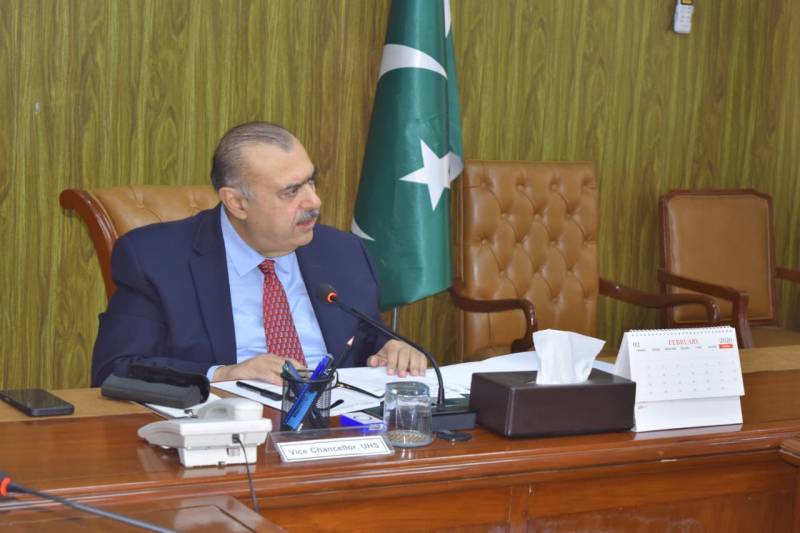

The 95th meeting of the Syndicate of the University of Health Sciences (UHS) approved the formation of Students’ Councils and hostel representative committees to ensure structured academic engagement and prompt resolution of student concerns.
The meeting was chaired by Vice Chancellor Prof Ahsan Waheed Rathore and attended by senior faculty members and administrative officials.
The Syndicate decided that the Students’ Councils will remain strictly non-political and advisory in nature, confined to academic, co-curricular and welfare matters.
Each council will comprise at least 20 students representing all classes, disciplines and both genders, with a tenure of one academic year.
A senior faculty member will serve as president, and no meeting will be deemed valid without faculty oversight.
The councils will document and present academic concerns to the administration and coordinate welfare initiatives.
In addition, separate hostel committees for male and female residents were approved to oversee cleanliness, mess arrangements, security, and complaint management under the supervision of chief wardens.
These committees will report to wardens, while the Students’ Council will report through the Staff President to a supervisory committee and ultimately to the Vice Chancellor.
The Syndicate also endorsed a newly developed digital Examiners’ Appointment and Bills Management System introduced by the university’s examinations department.
The centralized electronic system replaces manual processes, enabling real-time tracking of examiner appointments, assignments, and payments, thereby reducing delays, minimizing errors, and strengthening financial oversight.
Members further approved the establishment of the Prof Ahsan Waheed Rathore Centre for Faculty Excellence, aimed at promoting academic leadership, research advancement, and faculty development.
Among other decisions, the Syndicate approved three- and six-month certificate courses in Family Medicine Practice and Emergency Care to strengthen primary healthcare capacity for more than 120,000 family physicians nationwide.
Members were also briefed on Academic Council recommendations, including revision of the BS Human Nutrition and Dietetics curriculum in line with international standards and the introduction of a non-credit “Zero Semester” for selected MPhil entrants.
Affiliation matters were also discussed, with recommendations to increase MBBS intake at Al-Aleem Medical College to 150 seats and to grant affiliation to Queens Medical College for 100 seats following statutory inspections.