
West Bank: main dates since 1967
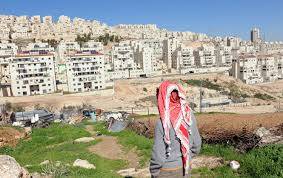

After Israel on Wednesday approved a major settlement project in the West Bank, here are key dates in the history of the Palestinian territory, which has been occupied by Israel since 1967.
1967: Israel seizes West Bank, Gaza -
In June 1967, Israel seized the West Bank, including East Jerusalem, from Jordan, during the third war with its Arab neighbours.
The areas that it seizes, which also include the Gaza Strip, become known as the Occupied Palestinian Territories.
Israel also annexed East Jerusalem in June 1967.
1967: settlement building starts
Under its Labour government, Israel began in September 1967 to settle the seized territory.
The settlement continues under a succession of different governments, in spite of repeated appeals from the United Nations, which declares the occupation of Palestinian territory illegal under international law.
The first Palestinian intifada, or uprising against Israeli rule, raged from 1987 to 1993.
1995: divided into three zones
Under the Oslo Accords signed in 1993 by Israel and the Palestinians, the West Bank and the Gaza Strip received limited self-government.
Under Oslo II, signed in 1995, the West Bank is divided into three zones: zone A is run by the Palestinian Authority, B is under mixed Israeli and Palestinian jurisdiction, and zone C -- 60 percent of the territory -- is totally under Israeli control.
The city of Ramallah, the seat of the Palestinian Authority set up in 1994, is in zone A, like the West Bank's other main cities, including Jenin, Nablus, Jericho, Bethlehem, and part of Hebron.
2002: separation barrier
In 2002, Israel began building a separation barrier between the West Bank and Israel at the height of the second Palestinian intifada (2000-2005,) saying it was crucial for security amid Palestinian suicide bombings in Jerusalem and Israeli cities.
The barrier cuts into many parts of the West Bank, and the Palestinians see it as a land grab and a de facto border, illegal under international law.
Since the end of the second intifada, the Israeli army has regularly carried out incursions into areas of the West Bank, which, under the now dead letter Oslo accords, are under the control of the Palestinian Authority.
The Israeli government justifies its incursions, accusing the Palestinian Authority of not reining in the Palestinian groups engaged in the armed fight against Israel.
Palestinians in their daily lives are impeded in their movements by several hundred Israeli military barriers, fixed or mobile, spread across the West Bank's roads.
2020: annexation plan
During his first term, US President Donald Trump put forward a peace plan in 2020 that would include major Israeli annexations in the West Bank, including the Jordan Valley, a strategic, fertile strip along the Jordanian border.
Benjamin Netanyahu's unity government, which announced a strategy to annex parts of the West Bank, set July 1, 2020, as the date to start implementing the plan, which the Palestinians reject.
Netanyahu then, under international pressure, officially suspended the planned annexation, instead signing US-sponsored normalisation accords later that year with the United Arab Emirates and Bahrain.
2022: upsurge in violence
From March 2022, the Israeli army started carrying out raids in the West Bank, especially in Jenin and Nablus in the north, in response to several deadly Palestinian attacks on Israeli soil.
The year 2022 is the most deadly in the West Bank since the end of the second intifada. But that year's toll in the territory is dwarfed in subsequent years, following the outbreak of the Gaza war in October 2023.
2025: Operation 'Iron Wall'
Clashes in the territory between Palestinians and the Israeli army or settlers soared after the start of the war in Gaza, which was sparked by the Hamas attack on southern Israel on October 7, 2023.
On January 21, 2025, the Israeli army launches an "anti-terrorist operation" called "Iron Wall" in the north of the West Bank.
It deploys tanks for the first time there since the end of the second intifada.
2025: new settlement projects
On May 29, Israel announced the creation of 22 new settlements spread across the territory.
Two months later, more than 70 Israeli lawmakers passed a non-binding motion urging the government to impose sovereignty over the West Bank, to "prevent any questioning of the fundamental right of the Jewish people to peace and security in their homeland".
On August 20, Israel approves a major settlement project to build some 3,400 homes in an area of the West Bank that the international community has warned threatens the viability of a future Palestinian state.