
Iran conveys conditions for US talks through Pakistan and Qatar
Iranian security chief Mohsen Rezaei says consultations with mediators were continuing: Tehran says US must accept its conditions before negotiations can begin: Accepting its conditions would be in Washington’s interest if US wanted to end war: Trump unexpectedly returned to White House as Middle East tensions increased
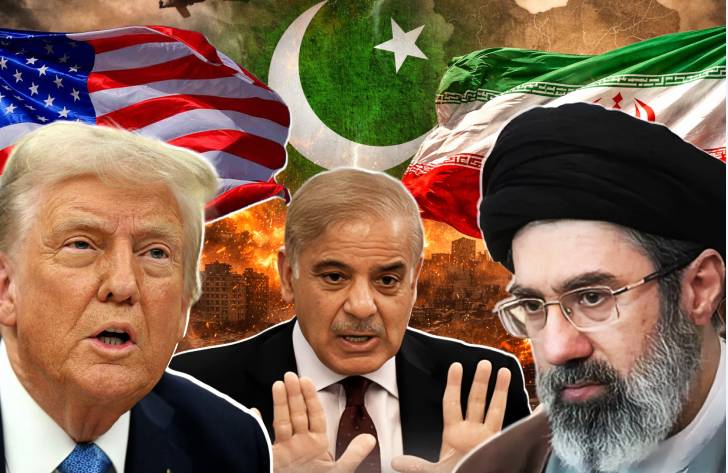

Iran has conveyed its conditions for negotiations with the United States to Qatari and Pakistani mediators as tensions continue to rise across the Middle East.
According to 24NewsHD TV, Mohsen Rezaei, secretary of Iran’s Supreme National Security Council, said consultations with Qatari and Pakistani mediators were continuing.
Mohsen Rezaei said it would be in Washington’s interest to accept Iran’s conditions if it wanted to find a way out of the war.
He said Iran was prepared for what he described as a decisive war and warned that threats from US President Donald Trump would produce no result.
Earlier this month, he had also said Tehran was pursuing a new strategy in military operations, diplomacy and dealing with the US economic blockade.
Meanwhile, AFP reported that US President Donald Trump cut short a weekend at Camp David to return unexpectedly to the White House on Saturday, as tensions rose in the Middle East.
There was no explanation from the administration why Trump was no longer returning on Sunday from Camp David, a secluded presidential complex in rural Maryland, as had been previously announced.
However, it is not uncommon for White House travel to change on weekends, including for weather reasons. Forecasts showed rain and thunderstorms in the hilly Camp David area on Sunday.
The change in plan came as the Saudi-led coalition fighting Yemen's Houthis said on Saturday that the Iran-backed group fired a ballistic missile at Riyadh at dawn, after a fire broke out near the Saudi capital's international airport.
The State Department and a string of US embassies issued security alerts to Americans.
The alerts cited "the potential for unforeseen escalation" and noted that "Iranian-supported Houthis have engaged in hostilities against Saudi Arabia, including civilian airports."
"This military conflict has the potential to escalate rapidly," the State Department warning said. "Americans outside the Middle East should seriously reconsider travel to and through the region."
The latest developments prompted the US State Department and several American embassies in the region to issue security alerts to US citizens.
The warnings referred to the possibility of an unforeseen escalation and noted previous Houthi attacks against Saudi Arabia, including civilian airports. The State Department warned that the military conflict could escalate rapidly and advised Americans outside the Middle East to seriously reconsider travel to and through the region.
The developments come amid continuing diplomatic efforts involving Iran, the United States and regional mediators. Iran’s security chief has publicly maintained that negotiations will not take place until Tehran’s conditions are met.
Pakistan has also remained involved in diplomatic contacts. On September 19, Deputy Prime Minister and Foreign Minister Ishaq Dar spoke by telephone with Iranian Foreign Minister Abbas Araghchi and stressed the importance of uninterrupted energy supplies and the safe and swift movement of ships. The two sides agreed to maintain close cooperation.