

Azerbaijan on Wednesday announced it had ended its military operation in the disputed region of Nagorno-Karabakh, after separatist Armenian forces agreed to lay down their arms and hold reintegration talks.
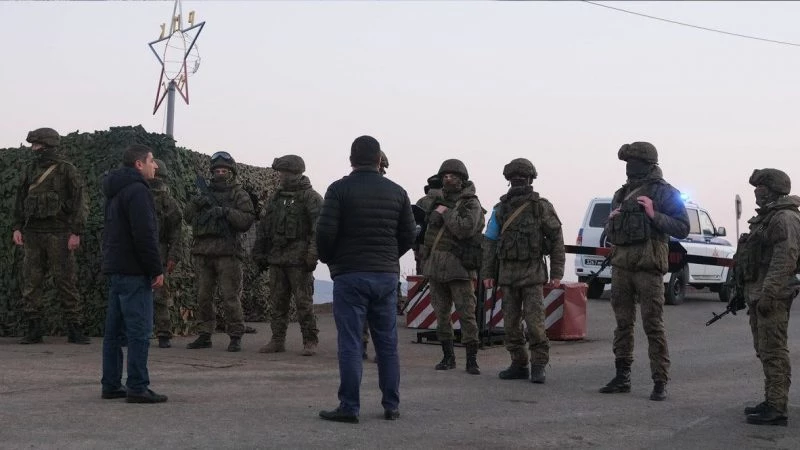
Baku and the ethnic Armenian authorities in Karabakh said a ceasefire deal had been brokered by Russian peacekeepers to stop the fighting a day after Azerbaijan launched an "anti-terrorist operation."
The separatists said they had committed to a "full dismantlement" of their forces and the withdrawal of Armenian army units from the region, at the centre of two wars between Armenia and Azerbaijan since the collapse of the Soviet Union.
Azerbaijan's defence ministry said that "all weapons and heavy armaments are to be surrendered" under the supervision of Russia's 2,000-strong peacekeeping force on the ground.
Both sides said talks on reintegrating the breakaway territory into the rest of Azerbaijan would be held on Thursday in the city of Yevlakh.
Hours after the ceasefire was announced, Azerbaijani presidential foreign policy advisor Hikmet Hajiyev told reporters Baku promised "safe passage" for the separatists who had laid down their arms.
There was no need for the UN Security Council meeting on the crisis that France had called for on Tuesday, he added.
"Azerbaijan's agenda is about peaceful reintegration of Karabakh Armenians, and Azerbaijan also supports the normalisation process between Armenia and Azerbaijan," Hajiyev added.
Charles Michel, president of the EU's Council of Europe, urged Baku to ensure the safety of Karabakh Armenians.
- Years of conflict -
The stunning collapse of separatist resistance represents a major victory for Azerbaijan's President Ilham Aliyev in his quest to bring Armenian-majority Nagorno-Karabakh back under Baku's control.
Jubilant residents in Azerbaijan's capital expressed hope the deal heralded a definitive victory in -- and the end of -- the decades-long conflict.
"I was very happy with this news. Finally, the war is over," 67-year-old pensioner Rana Ahmedova, told AFP.
"This means the end of Armenia," said the 37-year-old businessman Elbrus Sahverdiyev, echoing the deep-rooted feud being the two nations.
In Yerevan, Prime Minister Nikol Pashinyan said in a televised address that fighting on the ground appeared to have largely subsided and insisted it was "very important" the ceasefire hold.
Again denying his country's army was in the enclave, he said he expected Russia's peacekeepers to ensure Karabakh's 120,000 ethnic-Armenian residents could stay "in their homes, on their land".
The latest flare-up comes three years after Azerbaijan recaptured swathes of territory in and around the region in a brief war.
Armenia said at least 32 people had been killed and more than 200 wounded by the shelling in Karabakh, as the latest onslaught from Azerbaijan saw artillery, aircraft and drone strikes rock the region.
Baku said it had taken control of more than 90 military positions in the 24-hour offensive. Russian peacekeepers and separatist forces evacuated thousands of civilians from the fighting.
- International pressure -
The years of conflict have been marked by ethnic cleansing and abuses on both sides, and there are concerns of a fresh refugee crisis as Karabakh's Armenian population fears being forced out.
Footage posted online by local media appeared to show crowds of people gathering at the Russian-controlled airport in separatist stronghold Stepanakert.
The ceasefire announcement came after Aliyev warned the military operation would continue until the separatists laid down their weapons, despite mounting international pressure to halt fighting.
After the United States and France reached out to the leaders of both Azerbaijan and Armenia, Russia, the United Nations and Pope Francis added to calls to stop the violence.
The outburst of fighting came as Moscow, the traditional power broker in the region, is bogged down and distracted by its war on Ukraine, which has left it isolated by the West.
But its peacekeepers there appeared to have played a key role in helping to negotiate the ceasefire and will now oversee its implementation.
Russian President Vladimir Putin said he now hoped for a "peaceful" resolution in Karabakh, adding that Moscow has been in contact with all sides in the conflict.
- Armenia protests -
Armenia had recently accused Azerbaijan of a troop build-up around the disputed territory and Baku has long harboured the goal of one day retaking the territory it lost to Armenian forces in a war in the 1990s.
Turkey, a historic ally of predominantly Muslim Azerbaijan that views mostly Christian Armenia as one of its main regional rivals, had called the operation "justified", while urging "comprehensive negotiations".
The capitulation in Karabakh ratchets up domestic pressure on Pashinyan, who has faced stinging criticism at home for making concessions to Azerbaijan since the 2020 loss.
The Armenian leader insisted that his government had not been involved in drafting the latest ceasefire deal.
Small groups of protesters waving the separatist region's flags blocked a main road in Armenia's capital Yerevan as riot police protected official buildings.
Ilham Aliyev: Azerbaijan autocrat on cusp of Karabakh takeover
Azerbaijan's President Ilham Aliyev moved closer to asserting rule over the separatist region of Karabakh this week, in what would mark a major victory for the autocratic leader of almost two decades.
Wresting control over Nagorno-Karabakh had been a longtime goal of Aliyev, who took over in 2003 after the death of his father Heydar Aliyev, a former Soviet KGB officer and Communist-era boss.
The 61-year-old has won every election since, maintaining his family's tight grip over the oil-rich Caspian Sea state in polls denounced by the opposition as fixed.
Supporters have praised the Aliyevs for turning the republic -- once thought of as a Soviet Union backwater -- into a flourishing energy supplier to Europe, hosting Formula 1 races, UEFA football matches and the Eurovision Song Contest.
But critics argue they have crushed dissent and used their power to amass a fortune that funds a lavish lifestyle for the president and his family, while whitewashing human rights abuses.
Aliyev has always denied all accusations of corruption and human rights violations.
- The Aliyev Dynasty -
Likened in leaked US diplomatic cables to the fictional mob boss Michael Corleone, Aliyev amended the country's constitution in 2009 so he could run for an unlimited number of presidential terms.
Then in 2016, Azerbaijan adopted constitutional amendments that controversially extended the president's term in office to seven years from five.
The changes drew criticism from Council of Europe constitutional law experts as "severely upsetting the balance of powers" and giving the president "unprecedented" authority.
In 2017, the president appointed his wife Mehriban Aliyeva as first vice president.
Born into the powerful Pashayev family, she is sometimes seen as a possible successor or even rival to her husband.
The next generation of the Aliyev dynasty looks set to continue the family's leading role in Azerbaijani politics.
In 2010, The Washington Post reported property worth $75 million in Dubai in the names of the president's son Heydar and his daughters Arzu and Leyla.
Often spotted at lavish red carpet events abroad, Leyla, 39, and Arzu, 34, are thought to control substantial businesses interests of their own.
- 'New problems' -
Bolstered by billions in oil money, Aliyev has overseen years of steady economic growth and followed a pragmatic foreign policy agenda, treading carefully between Russia and the West.
He has maintained strong ties with historic ally Turkey and its President Recep Tayyip Erdogan, who has been a vocal proponent of Baku throughout unrest around Nagorno-Karabakh.
And Western leaders have also turned to Aliyev, who has marketed Azerbaijan as a crucial supplier of gas to European nations seeking to wean themselves of Russian supplies following the war in Ukraine.
But Aliyev's foreign politics have largely been eclipsed by Baku's decades long war with Armenian forces, upon which hinges much of his popularity.
The end of Azerbaijan's latest operation in the separatist region will undoubtedly boost Aliyev's ratings, independent political analyst Shahin Hajiyev told AFP.
"But he will be facing new problems now in fulfilling his promise to ensure the rights of Karabakh's Armenians," he said.
- War in Karabakh -
Aliyev has repeatedly blasted Armenia for "illegally occupying" Karabakh -- recognised internationally as part of Azerbaijan -- and peace talks with Yerevan have yielded little results.
Six weeks of fighting in autumn 2020 ended with a Russian-brokered ceasefire that saw Armenia cede swathes of land it had gained during fighting in the 1990s.
And after heavy bombardment from Azerbaijani forces and dozens of deaths, Armenian separatists in the conflict-ridden region grudgingly agreed Wednesday to lay down their arms and hold reintegration talks.
This process may be more difficult than the military operation itself, Hajiyev said.
If Azerbaijan fails to ensure Armenian rights in line with international standards, this, Hajiyev warned, "will be a negative factor affecting the image of both Aliyev and the country on the international arena."