
Pakistan’s year of diplomatic miracles
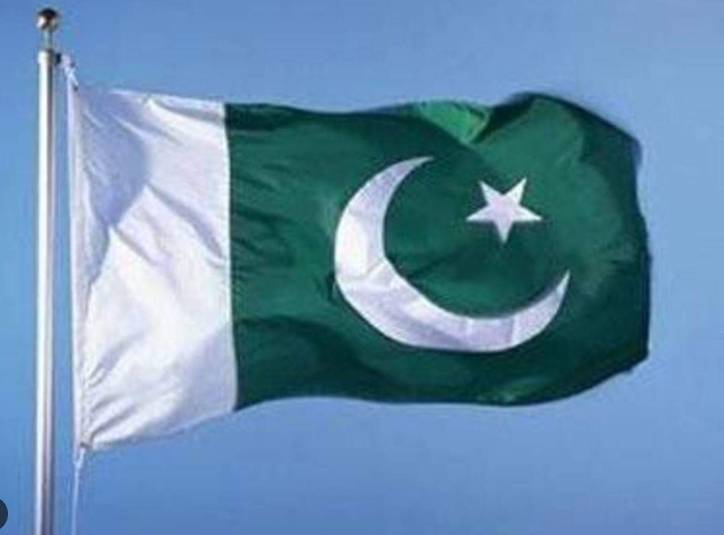

It’s hard to say which is a bigger achievement for Islamabad’s diplomacy: US President Donald Trump’s shift toward Pakistan or the buzz over the recently announced Saudi-Pakistani “Strategic Mutual Defence Agreement,” both of which are reverberating across Southwest Asia — though the US tilt may prove ephemeral, according to an analysis by Robert A. Manning published in Foreign Policy magazine.
The accord highlights a tsunami of near-Kissingerian diplomacy in just the past six months: a stunning reset with the United States — at India’s expense, boosted defence and trade ties with Turkey, a defence accord with Malaysia, a trade and energy deal with Iran that was announced during an August visit by the Iranian president, and the expansion of already strong ties with China during Pakistani Prime Minister Shehbaz Sharif’s September trip to Beijing.
Pakistan’s buoyancy is all the more remarkable considering that last spring, as the country got its 24th bailout from the International Monetary Fund, the financial world’s worry was that Pakistan might become a failed state. The sense of surprise among South Asia wonks at how swiftly technocratic officials have stabilized their economy rivals their amazement at Islamabad’s diplomatic bounty. All these achievements come despite growing terrorist insurgencies in Balochistan and among the Pakistani Taliban along the country’s border with Afghanistan.
What does this mean in the long term? The proximate cause for the Saudi-Pakistani defence pact appears to be Israel’s bombing of a Hamas office in Qatar. The idea that Israeli Prime Minister Benjamin Netanyahu had license to attack Qatar—the host of the largest US airbase in the Middle East and a close US partner—stunned Riyadh and other Gulf states. Saudi Arabia is now pricing US unreliability into its regional security strategy. Pakistani officials have said that the door is not closed to other Gulf states also joining the defense pact. Yet the recent NATO-like security guarantee that Washington made to Qatar and reports that a similar accord may soon be reached with Saudi Arabia suggest that the United States got the message and is doubling down on its regional security role.
Alternatively, the Saudi-Pakistani deals may match up with Trumpian objectives. If reports of a new US defence strategy of retrenchment—and prioritizing the Western Hemisphere—are correct, then Washington may welcome Islamabad playing a greater role as a Gulf security provider, perhaps as an extra layer of insurance. Pakistan’s support for Trump’s Gaza peace plan will help keep Islamabad in his good graces.
However, Pakistan’s deepening Gulf ties may risk ensnaring the country in regional conflicts such as Yemen’s civil war or in a peace stabilization force if Trump’s plan for the Gaza Strip is realized. The Saudis—major oil suppliers to India who have their own strategic partnership with New Delhi—may have some tough choices in a future India-Pakistan confrontation.
Some argue that the defence pact is more of a formalization of long-standing Saudi-Pakistani military and economic ties than a seismic event—and suggest that it may be a form of extended deterrence, with a Sunni Muslim nuclear weapon breaking Israel’s regional nuclear monopoly. In his 2024 book War, American journalist Bob Woodward quotes Saudi Crown Prince Mohammed bin Salman telling a US senator, “I don’t need uranium to make a bomb. I will just buy one from Pakistan.”
A Saudi-Pakistani joint statement used NATO-like language to describe the agreement, stating “that any aggression against either country shall be considered an aggression against both.” How either the Saudis or Pakistanis respond to any given security threat has not yet been tested.
Saudi-Pakistani defence ties stretch back to the 1970s. Pakistani commandos helped the Saudis quell a terrorist attack on the Grand Mosque in Mecca in 1979, and the Pakistani military now has some 2,000 troops in Saudi Arabia training and advising Saudi troops. Pakistan, meanwhile, needs Saudi money. Riyadh has extended and rolled over loans—$3 billion last December—and reportedly finalized approval for a long-discussed $10 billion oil refinery in Gwadar, adding to the China-Pakistan Economic Corridor project.
Yet the most remarkable result of shrewd Pakistani diplomacy—in the Richard Nixon-to-China category—is the resurrection of atrophied U.S.-Pakistan ties, diminished since the 2021 US withdrawal from Afghanistan, while also fracturing the US-India connection. India fears that Trump’s Pakistan shift is upending 25 years of careful cultivation and trust-building of distinct US-India ties. Before this administration, India had increasingly been viewed in Washington—with strong bipartisan support—as a key partner, a counterweight to China, a pillar of what was then the United States’ Indo-Pacific strategy.
Islamabad’s new entente with Washington depended on a serendipitous chain of events that began in March, when Pakistani intelligence helped the U.S. capture the Islamic State-Khorasan operative responsible for the Abbey Gate bombing at Kabul airport that killed 13 US soldiers in August 2021. The US Centcom commander, Army Gen. Michael Kurilla, praised Islamabad’s “phenomenal cooperation” in counterterrorism following the operation.
Against that backdrop, a testy phone call between Trump and Indian Prime Minister Narendra Modi precipitated a rift in US-India ties, creating an opening for Pakistan. In his quest for a Nobel Peace Prize Trump claimed credit in May for the cease-fire that followed clashes between Islamabad and New Delhi, saying that he had “solved” the most intense Indo-Pakistan conflict in 30 years. He followed that with an offer to mediate in the Kashmir dispute, crossing India’s firm red line against third-party mediation.
That led to a heated phone call with an irate Modi, who had invested heavily in what he believed was a personal relationship with Trump. Modi argued that the cease-fire was achieved by India and Pakistan’s efforts, not the president’s, incensing Trump. At the same time, Pakistani officials lavished praise on Trump for the cease-fire, welcomed him to mediate in Kashmir, and nominated him for the Nobel Prize.
Not coincidentally, Trump then imposed 50 percent tariffs on India for buying discounted Russian oil (a policy that the United States had previously encouraged and Trump and senior U.S. officials began trash-talking India. In late July, Trump said that India, which grew at 6.5 percent in 2024, was a “dead economy”, while Treasury Secretary Scott Bessent repeatedly attacked India for “profiteering” from Russian oil.
The bitterness toward India created chances for Pakistan. That helps explain a two-hour lunch between Pakistani Army Chief Field Marshal Asim Munir and Trump in June as well as several Trump meetings with Sharif at the United Nations, the White House, and at the recent Gaza peace conference in Egypt.
At the same time, it pushed New Delhi, usually wary of China’s rise, closer to Beijing. Modi, flaunting his strategic autonomy, was in China last month clasping hands with Chinese President Xi Jinping and Russian President Vladimir Putin and making plans to boost economic ties.
Pakistan also got a highly favourable trade package out of Trump. Sharif dangled two prizes that the White House is obsessed with: US rights to develop what Trump says are massive oil reserves (Pakistan imports 80 percent of its oil) and rights to critical minerals, for which a US firm has announced a $500 million investment. Remarkably, Islamabad retains its status as a “major non-NATO ally” of the United States while thickening ties to all three major powers simultaneously.
But these triumphs may not be sustainable. For starters, Pakistan’s shiny promises of a crypto deal, oil, and critical minerals to the United States may be mostly a mirage. With regard to oil, there may be no massive reserves. ExxonMobil and other oil firms have explored Pakistani oil, come up dry, and left, and even Pakistani energy officials doubt such large-scale commercially recoverable resources.
There is no question that Pakistan has substantial critical minerals, but most are located in Balochistan, the site of intensifying terrorist attacks on government targets that have given China pause. US mining operations will be problematic at best. Then there is Pakistan’s adroit multialignment with Moscow and Beijing. How will that fare as great-power competition intensifies? What will be the fate of US-Pakistani warmth if some of these vulnerabilities fail to realize the promise of the new entente?
It is certainly possible that the souring with India could be a Trump bargaining tactic intended to gain leverage for a trade deal still quietly being negotiated. Trump appeared to extend an olive branch recently, plaintively saying that he “will always be friends with Modi” and that the United States and India share “a very special relationship.” And Trump said that during a phone call on Oct 15, Modi pledged to stop buying Russian oil, though India denied it.
None of the fundamentals of the strategic logic driving US policy toward India have changed: Strategic competition with China continues to drive Washington’s national security and industrial policies. This will be true however the current trade war—and a possible meeting between Trump and Xi—turns out. The idea of India as a counterweight to China and an economic and technology partner has not lost its allure for Washington, though Indian anger and resentment at the humiliating snubs will linger.