
UAE to collaborate with Pakistan on Karachi-Peshawar rail project ML-1
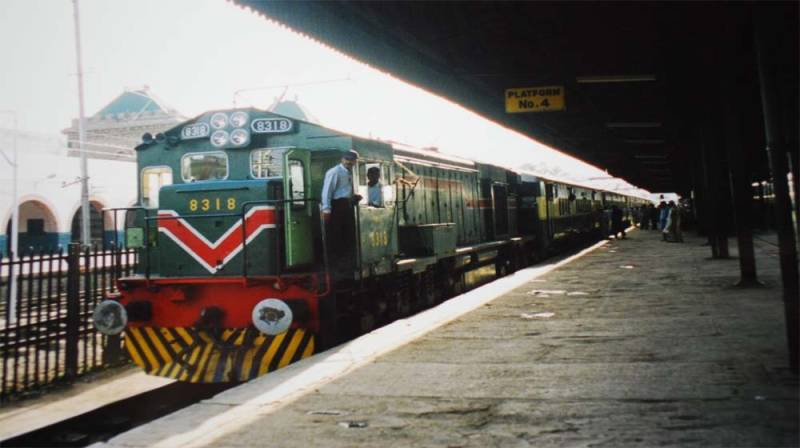

Pakistan’s Ambassador to the United Arab Emirates (UAE), Faisal Niaz Tirmizi, announced on Thursday that Pakistan and the UAE are set to strengthen cooperation in the railway sector. He noted that the Gulf nation is already involved in Pakistan’s Main Line-1 (ML-1) project and that Islamabad is in ongoing discussions with Etihad Rail.
The ML-1 project is Pakistan’s largest railway infrastructure initiative, focused on the modernization and dual-tracking of the 1,872 km Karachi-Peshawar rail line. The upgrade includes improvements to signaling systems, bridges, stations, and speed capacity.
Alongside ML-3 — a corridor linking Quetta to Kotri via Jacobabad — these railway lines are considered vital to enhancing regional connectivity, increasing freight capacity, and reducing travel times.
Tirmizi’s remarks came as Pakistan’s delegation, led by Minister of State for Finance and Railways Bilal Azhar Kiyani, attended the Global Rail Conference and Exhibition 2025 in Abu Dhabi. The event, held from September 30 to October 2, brought together over 24 ministerial delegations, more than 60 global CEOs, and 200 international speakers under the theme "Driving the Future of Transport and Global Connectivity."
“Pakistan had a valuable opportunity to highlight its strategic location at the crossroads of Central Asia, South Asia, and the Middle East,” Tirmizi said.
He confirmed that both Pakistan and the UAE would exchange best practices, particularly as Etihad Rail is engaged with the ML-1 project. Pakistan is also in active talks with the company on further cooperation.
The event, hosted by Etihad Rail in partnership with the UAE Ministry of Energy and Infrastructure, featured over 200 exhibitors and welcomed more than 20,000 participants. It served as a global platform for strategic dialogue, showcasing major projects, and shaping the future of rail infrastructure.
“Rail is the most cost-effective and environmentally friendly mode of transportation after sea freight,” the envoy said. “This is an opportunity for all countries to explore greater connectivity.”
During his visit, Minister Kiyani experienced a high-speed train journey between Abu Dhabi and Dubai on a route set to become operational in 2026. “It took him just 35 minutes to travel between the two cities,” Tirmizi said.
Kiyani also chaired a session attended by railway ministers from several nations, including Egypt, Saudi Arabia, Qatar, Oman, Bahrain, Jordan, Afghanistan, Turkmenistan, and Uzbekistan. In a key meeting with UAE President Sheikh Mohammed bin Zayed Al Nahyan, he stressed the importance of deepening cooperation in governance, energy, railways, and investment.
“This event has significantly contributed to enhancing both bilateral ties and regional connectivity,” said Tirmizi.
In a separate statement, Pakistan’s diplomatic mission in the UAE shared that Kiyani had outlined the country’s vision to transform its railway sector into a modern, reliable, and environmentally sustainable transportation backbone.
He emphasized the strategic importance of upgrading both the ML-1 and ML-3 corridors to align with international standards.
“Pakistan’s active participation in the Global Rail Conference 2025 reflects its commitment to sustainable transport and to building international partnerships that support long-term economic development and connectivity,” the statement said.
On the sidelines of the conference, Kiyani met with Etihad Rail CEO Shadi Malak to explore cooperation in freight logistics, technology transfer, and network development. He also visited the exhibition stalls of Etihad Rail and Hafeet Rail to assess regional advancements in rail systems.