
Yinchuan A Scenic Chinese City, Hub of Culture, Civilization, and Economic Activities
After spending two busy days in Beijing, our delegation boarded a flight in the evening to Yinchuan, the capital of Ningxia Hui Autonomous Region, the only autonomous region of China. The journey took over two hours, and upon landing at Yinchuan Airport, one could immediately sense how every aspect of China’s infrastructure is the result of long-term planning. To say that no airport in Pakistan can compare not only with Beijing’s, and not even with Yinchuan’s would not be an exaggeration.
Tired yet excited, we arrived in this autonomous region where we were joined by the capable Foreign Office officer Ms. Tina Linhanguang, while Ms. Shifang and Mr. Mei Jun Ji had already accompanied us from Beijing. At the hotel, Ms. Tina and her colleagues handed us our accommodation details, Expo entry cards, and meal vouchers. Meanwhile, Yinchuan’s cool weather and scenic walkways had already cast a spell on us.
Before narrating further, it is important to share some historical background of Yinchuan.
Located between the Yellow River and the Helan Mountains, Yinchuan literally means “Silver River.” It is the capital of Ningxia Hui in northwest China, spread over 9,000 square kilometers with a population of around 2 to 2.2 million. Its history spans thousands of years, with relics from the Neolithic period still present. The Tangut people made it the capital of the Western Xia Dynasty in the 11th century. Though it was devastated by Mongol invasions, the city eventually revived and grew into an agricultural and trade hub. Today, it is famous for grapes cultivation and handicrafts.
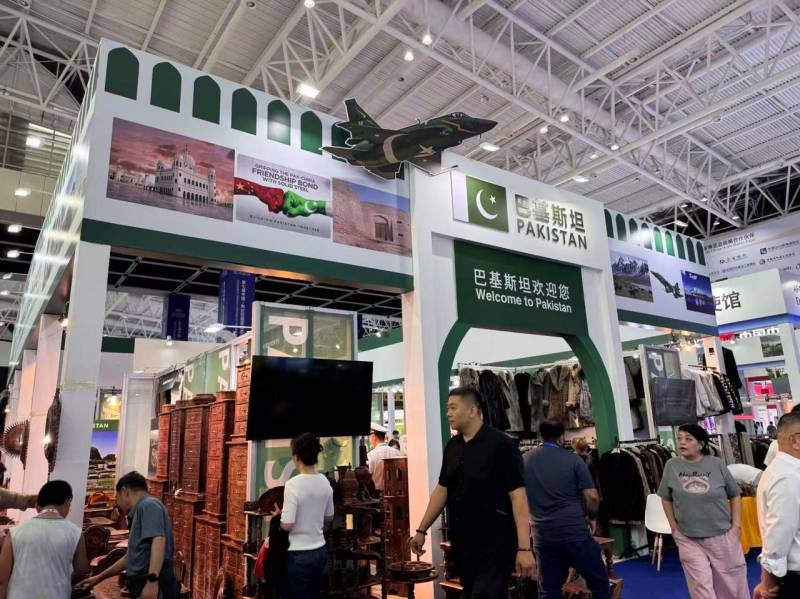
In recent years, Yinchuan has strengthened its global standing. A major example is the China Arab Expo 2025, held from August 28 to 31 at Yinchuan International Exhibition Center. The Expo served as a significant platform for enhancing cooperation between China and the Arab world, with the theme of “Innovation, Green Development, and Prosperity.”
More than 1,000 institutions and investors participated, including representatives from 22 Arab countries, with the UAE honored as the “Guest Country of Honor.” Discussions focused on energy, the digital economy, Belt and Road cooperation, clean energy, and E commerce. Spanning 36,000 square meters, the Expo facilitated over 300 agreements worth more than 107 billion yuan.
Beyond trade, the Expo also highlighted cultural exchanges through seminars on standardization and digital development. Importantly, it laid down a strong framework for future relations, with the next China-Arab Summit scheduled for the coming year.
Security arrangements during the Expo were meticulous. The Pakistani pavilion was a highlight for us, particularly the display of the JF17 Thunder aircraft model, which filled us with pride. After a busy day, our group leader Mian Imran Masood including Prof. Khalid Manzoor Butt, Muhammad Hassan Raza, Abbas Naqvi, Shahramul Haq, Laiba Zainab and others enjoyed a delightful dinner and later gathered outside the hotel’s nearby market to exchange thoughts on China’s development and culture.
The next day, we visited the Smart Agriculture Industrial Park, where modern agricultural innovation was on full display. Controlled environment production of cherry tomatoes was astounding consistent in taste and size, with thousands of tons produced annually. These tomatoes are not only widely consumed across China but also generate millions in foreign exchange as well.
We also visited China Town, a project brought by President Xi Jinping and completed in just four years. The initiative provided employment opportunities for local women, along with housing facilities. Surrounded by mountains, the township included manufacturing units, hospitals, schools, and residential blocks, with a focus on boosting e commerce and creating sustainable livelihoods.
In just two days, Yinchuan left unforgettable impressions its modern infrastructure, high-rise residential units, economic growth stories, greenery, and vibrant culture collectively illustrated how this city has emerged as both a guardian of history and a beacon of future progress. After this enriching stay in Yinchuan, our delegation departed for Guiyang.
(Details of Gouyang will be shared in the next column)