
Hezbollah marks second anniversary of former chief Nasrallah's killing
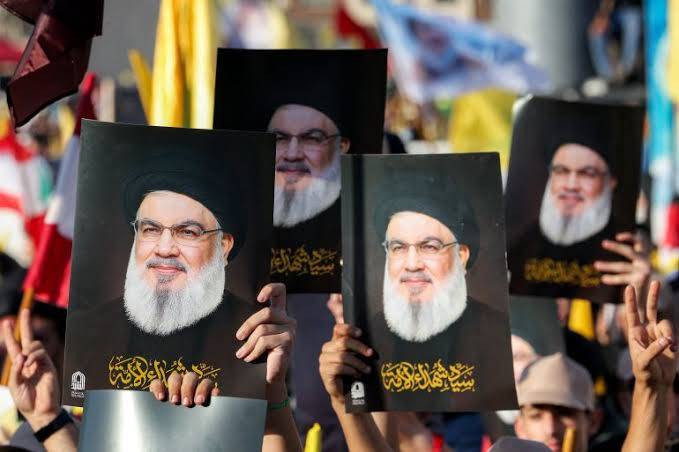

Hezbollah supporters gathered near the tomb of their late former chief Hassan Nasrallah on Sunday to mark the second anniversary of his killing by Israel, defiant even as two wars have left the Iran-backed group weakened.
AFP correspondents saw thousands of people, many carrying Hezbollah flags, rallying for the commemorative event in Beirut's southern suburbs, a Hezbollah stronghold that Israel bombed during conflicts this year and in 2024.
Ali Nasser, 30, from Haddatha in south Lebanon, said that "this is a historic day. Every year we commemorate it to renew our pledge" to Nasrallah "that we are walking along his path".
The former chief "illuminated the path for us and God willing, we'll carry on... these crowds are proof of our continuation and our loyalty to this pledge", he added.
Nasrallah, a charismatic leader revered by his supporters and condemned abroad as the leader of a group whose armed wing was blacklisted by many western capitals, was killed in an Israeli airstrike on Beirut's southern suburbs on September 27, 2024 during more than two months of war that pummelled the group and decimated its top leadership.
His chosen successor Hashem Safieddine, who is also being commemorated on Sunday, was killed in another strike days later.
"This is a sacred occasion for us," said Ibrahim Hijazi, 56, from Blida in south Lebanon, a border town currently occupied by Israel.
"We lost someone dear to us, but thank God, Sheikh Naim and others are here," he said, referring to current Hezbollah chief Naim Qassem, who was to make a televised address to the gathering.
"We are continuing this path... we will carry on even if we are all become martyrs," he vowed.
After a November 2024 ceasefire, and with Hezbollah weakened, Lebanese authorities committed to disarming the militants.
Hezbollah, which has repeatedly refused to disarm, instead drew Lebanon into the Middle East war in March this year by attacking Israel to avenge the killing of Iran's supreme leader in US-Israeli strikes.
Israel responded with massive airstrikes and a ground invasion that Lebanon says have killed more than 4,300 people, while hundreds of thousands of others remain displaced.
Violence has decreased since a fragile ceasefire announced in June after a US-Iran understanding on the broader war, while Lebanon and Israel reached a framework agreement later that month.
Israel has kept up attacks and maintains troops in a self-declared "security zone" running around 10 kilometres (six miles) inside south Lebanon.
Under the framework deal, Hezbollah is supposed to disarm and the Lebanese military to deploy in so-called pilot zones in south Lebanon as Israel withdraws.
Progress has largely stalled, with Israel warning it will stay put as long as Hezbollah remains a threat.